
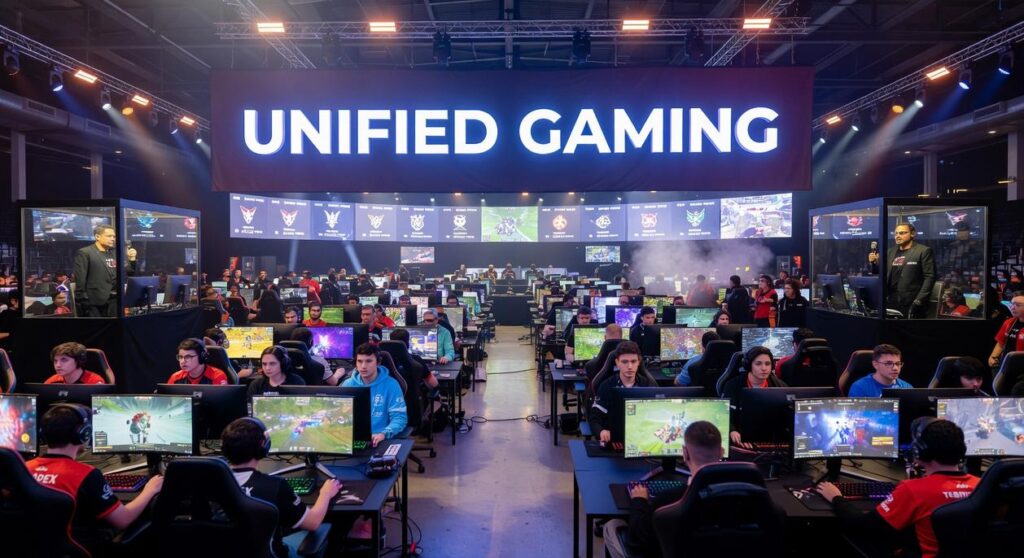
Competitive gaming is evolving faster than ever, and staying ahead means understanding the trends shaping today’s multiplayer landscape. If you’re searching for clear insights into platform shifts, tournament strategies, and what’s really driving player engagement, this article delivers exactly that. We break down the most important developments in multiplayer ecosystems, examine the impact of cross-platform gaming growth, and uncover how these shifts influence both casual and competitive play.
Many players and organizers struggle to separate hype from meaningful change. That’s why this guide focuses on practical analysis—what’s working, what’s fading, and how you can adapt your tactics accordingly. Our insights are built on deep industry monitoring, tournament data review, and hands-on evaluation of emerging multiplayer platforms.
By the end, you’ll understand where competitive gaming is heading, how platform integration is reshaping events, and what strategic adjustments can give you a measurable edge in today’s dynamic gaming environment.
The End of Digital Islands: Why Cross-Platform Is Now a Core Requirement
As players embrace the benefits of cross-platform gaming, the excitement builds for upcoming events like Thehakevent, where enthusiasts can connect and celebrate this gaming revolution together – for more details, check out our The Online Gaming Event Thehakevent.
Let’s be honest: nothing kills hype faster than realizing your friend is on PlayStation while you’re on PC. That’s player fragmentation—the split of a game’s audience across different hardware ecosystems—and it has frustrated gamers for over a decade. In my view, in 2026, this shouldn’t even be a debate. If your multiplayer title doesn’t connect players across devices, you’re building DIGITAL WALLS in a borderless world.
Some argue exclusivity drives console sales. Sure, that worked in the Xbox 360 era. But today? Players expect access, not isolation. Games are social platforms now (basically digital hangouts with better graphics). Blocking cross-play feels outdated.
From a commercial standpoint, the benefits are obvious:
- Larger total addressable market (everyone can play together)
- Healthier matchmaking pools (faster queues, fairer matches)
- Longer lifecycle due to sustained engagement
That’s not theory. Titles like Fortnite and Call of Duty: Warzone became global phenomena partly because of early cross-play adoption (Epic Games reported hundreds of millions of registered players within two years of launch). Cross-platform gaming growth has directly expanded revenue ceilings for live-service titles.
A unified player base also improves community health:
- Faster matchmaking
- Broader skill distribution
- Stronger competitive ecosystems
Critics worry about balance issues between controller and mouse users. Fair point. But input-based matchmaking largely solves that (pro tip: segment by input, not platform).
If anything, this shift mirrors broader indie vs aaa games market shifts and player preferences—players reward accessibility.
In my opinion, cross-platform isn’t a feature anymore. It’s the baseline. Build islands, and players will simply sail elsewhere.
The Three Pillars of a Unified Gaming Experience

A unified gaming experience means players can move between platforms—console, PC, or mobile—without friction. Sounds simple. In practice, it’s anything but.
Pillar 1: Cross-Play – The Technical Hurdles
Cross-play allows users on different platforms to play together in the same match. However, developers must solve three major challenges.
First, network architecture—the underlying system that connects players—must handle varied server standards and security protocols. According to Epic Games’ developer documentation, synchronizing these environments requires custom matchmaking layers and unified account systems.
Second, input parity (balancing controller vs. mouse/keyboard performance). Competitive players argue PC users gain accuracy advantages. Some studios add aim assist tuning or optional input-based matchmaking to level the field.
Third, platform certification. Sony, Microsoft, and Steam each require technical compliance reviews before updates go live. That means every patch must pass multiple approval processes (yes, even tiny bug fixes).
Pillar 2: Cross-Progression – The Player’s Investment
Cross-progression lets players carry unlocks, skins, and achievements across platforms. This is critical because digital items represent time and money invested.
Without it, switching platforms feels like starting over—like losing your save file before the final boss. With it, loyalty skyrockets. A 2022 Accenture report noted that seamless progression directly supports cross-platform gaming growth by reducing player churn.
Some argue it’s expensive to maintain unified databases. True. However, the goodwill and retention benefits often outweigh the backend costs.
Pro tip: Implement account linking early in development. Retrofitting identity systems later is painful.
Pillar 3: Cross-Commerce – The Unified Economy
Cross-commerce creates a shared marketplace across platforms. The challenge? Revenue share policies differ. Sony, Microsoft, and Steam each take platform fees (often around 30%, per public developer agreements).
Studios must design pricing structures that respect these policies while keeping items consistent.
Tactical Breakdown: What to Prioritize
- Competitive FPS: Prioritize cross-play and input parity.
- Casual RPG: Focus on cross-progression first.
- Live-service games: Invest early in cross-commerce systems.
Build the right pillar first, and the rest becomes far easier.
Building Bridges: Fostering a Truly Inclusive Cross-Platform Community
Unified Communication Tools
If players can’t talk, they can’t bond. It’s that simple. In-game voice and text chat that works seamlessly across PC, console, and mobile isn’t a luxury—it’s infrastructure. When communication systems fragment by platform, communities fracture with them. Third-party apps like Discord often act as a stop-gap, giving players a shared digital “lobby.” But relying solely on external tools creates friction for casual users (and friction is where engagement quietly dies).
A unified system keeps strategy, trash talk, and teamwork in one ecosystem. Pro tip: build opt-in cross-platform channels with smart moderation tools to reduce toxicity before it spreads.
Platform-Agnostic Events & Tournaments
True inclusivity shows up in competition design. Platform-agnostic tournaments focus on fair matchmaking, not hardware hierarchy. That means input-based pools (controller vs. keyboard), standardized rule sets, and latency balancing where possible. While some argue PC will always dominate due to frame rates, data from cross-platform gaming growth shows player retention increases when ecosystems merge, not divide (Newzoo, 2024).
The competitive edge most overlook? Transparent rule communication. Publish input allowances, aim-assist policies, and hardware caps clearly. When expectations are explicit, disputes shrink.
Celebrating Diversity, Not Division
“PC master race” jokes may seem harmless, but tribalism erodes shared identity. Community spotlights, mixed-platform leaderboards, and collaborative events reinforce belonging. Think less console wars, more Avengers assembling.
Accessibility as a Cornerstone
Inclusivity also means adaptive controllers, subtitle customization, colorblind modes, and scalable UI. Accessibility—designing for players of all abilities—levels the playing field. When everyone can connect and compete, community isn’t forced. It’s inevitable.
Dominate the Next Level of Competitive Play
You came here to understand where competitive gaming is heading and how to stay ahead of the curve. Now you’ve seen how evolving multiplayer ecosystems, smarter tournament tactics, and cross-platform gaming growth are reshaping the battlefield.
The reality is simple: players who ignore these shifts fall behind. Fragmented strategies, outdated platform assumptions, and poor event preparation cost wins. If you want consistent results, you need insights that match the speed of the industry.
Act on what you’ve learned. Track platform trends. Refine your tournament prep. Adapt your team strategy to meet today’s multi-device competition head-on.
If you’re serious about winning more matches and staying ahead of emerging multiplayer trends, plug into a trusted source for expert breakdowns and competitive insights. Join the #1 rated hub for tournament-driven strategy and platform intelligence—start sharpening your edge today.

 Patriciavina McMillan writes the kind of expert breakdowns content that people actually send to each other. Not because it's flashy or controversial, but because it's the sort of thing where you read it and immediately think of three people who need to see it. Patriciavina has a talent for identifying the questions that a lot of people have but haven't quite figured out how to articulate yet — and then answering them properly.
They covers a lot of ground: Expert Breakdowns, Core Gaming Insights and Strategies, Multiplayer Platform Trends, and plenty of adjacent territory that doesn't always get treated with the same seriousness. The consistency across all of it is a certain kind of respect for the reader. Patriciavina doesn't assume people are stupid, and they doesn't assume they know everything either. They writes for someone who is genuinely trying to figure something out — because that's usually who's actually reading. That assumption shapes everything from how they structures an explanation to how much background they includes before getting to the point.
Beyond the practical stuff, there's something in Patriciavina's writing that reflects a real investment in the subject — not performed enthusiasm, but the kind of sustained interest that produces insight over time. They has been paying attention to expert breakdowns long enough that they notices things a more casual observer would miss. That depth shows up in the work in ways that are hard to fake.
Patriciavina McMillan writes the kind of expert breakdowns content that people actually send to each other. Not because it's flashy or controversial, but because it's the sort of thing where you read it and immediately think of three people who need to see it. Patriciavina has a talent for identifying the questions that a lot of people have but haven't quite figured out how to articulate yet — and then answering them properly.
They covers a lot of ground: Expert Breakdowns, Core Gaming Insights and Strategies, Multiplayer Platform Trends, and plenty of adjacent territory that doesn't always get treated with the same seriousness. The consistency across all of it is a certain kind of respect for the reader. Patriciavina doesn't assume people are stupid, and they doesn't assume they know everything either. They writes for someone who is genuinely trying to figure something out — because that's usually who's actually reading. That assumption shapes everything from how they structures an explanation to how much background they includes before getting to the point.
Beyond the practical stuff, there's something in Patriciavina's writing that reflects a real investment in the subject — not performed enthusiasm, but the kind of sustained interest that produces insight over time. They has been paying attention to expert breakdowns long enough that they notices things a more casual observer would miss. That depth shows up in the work in ways that are hard to fake.