

Competitive gaming evolves at a relentless pace. New multiplayer platform updates, shifting metas, and high-stakes tournament formats can change what works almost overnight. If you’re searching for clear, actionable insights to sharpen your strategy and stay ahead of the competition, this article delivers exactly that.
We break down current multiplayer platform trends, highlight emerging competitive patterns, and provide pro gameplay analysis designed to translate directly into smarter in-game decisions. Whether you’re preparing for your next tournament or refining your ranked climb strategy, you’ll find focused insights that cut through speculation and get straight to what works.
Our coverage draws on deep observation of live matches, evolving mechanics, and event-based tournament tactics to ensure you’re not just keeping up with the meta—you’re anticipating it. By the end, you’ll have a sharper understanding of today’s competitive landscape and the strategic adjustments that can give you a measurable edge.
The Blueprint of Elite Play
Elite competition isn’t about faster clicks; it’s about frameworks—structured decision-making systems guiding every move. A framework is a repeatable mental model players use to read situations, assign priority, and act with intent. Many plateau because mechanics outpace strategy. They react instead of controlling tempo (the pace and pressure of a match).
Through pro gameplay analysis, patterns emerge: pros trade resources deliberately, rotate before danger appears, and force opponents into predictable responses. Think chess, not chaos. When you clarify win conditions early, every action supports them. That’s the shift from skilled to elite—intentional control over flow.
Macro-Level Dominance: Winning the Game Before the Fight Begins
Macro play is the art of controlling the map, managing resources, and positioning strategically on a global scale. Think of it as chess, not street brawling. While micro is about mechanics, macro is about where and when. In games like League of Legends or Dota 2, teams that master macro often win before the final fight even starts.
Rotational Strategy
Rotations are coordinated movements across the map to create advantages. Instead of chasing kills, top teams:
- Push a wave to force a response.
- Rotate early toward an objective.
- Collapse with numbers before the enemy can react.
That’s how you create favorable engagements. If Dragon spawns in 45 seconds, reset early, establish vision, and move first. Being late isn’t heroic—it’s predictable (and predictability loses games).
Economic Warfare and Tempo
Tempo is your team’s ability to act while the opponent reacts. Build small gold and experience leads, then press them. Deny jungle camps. Freeze waves. Force recalls. A 1,500 gold lead translates into item spikes—meaning your “even” fight isn’t actually even.
Vision Control and Information Asymmetry
Vision creates information asymmetry—when you know more than your opponent. Invest in wards, clear enemy vision, and track cooldowns. Safer decisions compound into bigger leads.
Use pro gameplay analysis in the section once exactly as it is given
Pro tip: Review replays focusing only on rotations and ward placement—not kills. You’ll start seeing the game unfold before it happens.
Micro-Mechanics & APM: The Science of Split-Second Execution
Elite mechanics go far beyond raw aim. Yes, flicking (rapid crosshair snaps to a target) and tracking (smoothly following a moving opponent) matter—but crosshair placement is the quiet advantage few dissect properly. By pre-aiming at head level where enemies are likely to appear, pros reduce reaction time by milliseconds (which, in competitive play, is an eternity). Meanwhile, refined movement mechanics—like counter-strafing and tight-angle peeking—let players shoot accurately while staying evasive.
However, mechanics alone don’t win fights. Ability cycling—the intentional sequencing of skills for layered pressure—separates contenders from champions. Cooldown management means tracking not just your timers, but the enemy’s. If an opponent’s escape ability is down, that’s a window. Create pressure, force utility, then collapse. It’s chess at 200 beats per minute.
Next comes APM, or Actions Per Minute. Contrary to popular belief, high APM isn’t frantic clicking. It’s efficient input density: micro-adjustments, animation canceling (interrupting non-essential frames to act faster), and momentum preservation. Use pro gameplay analysis in the section once exactly as it is given. The difference? Intentional actions versus noise.
To crystallize the edge, focus on:
- Angle discipline – expose minimal hitbox while maximizing sightlines.
- High-ground leverage – verticality forces opponents into predictable paths.
- Cover cycling – shoot, reset, re-engage (Rambo works in movies, not ranked).
Some argue positioning is macro strategy, not micro. Yet in reality, split-second foot placement determines survival. Micro is macro—compressed.
The Mental Game: Psychological Warfare and Tilt Control
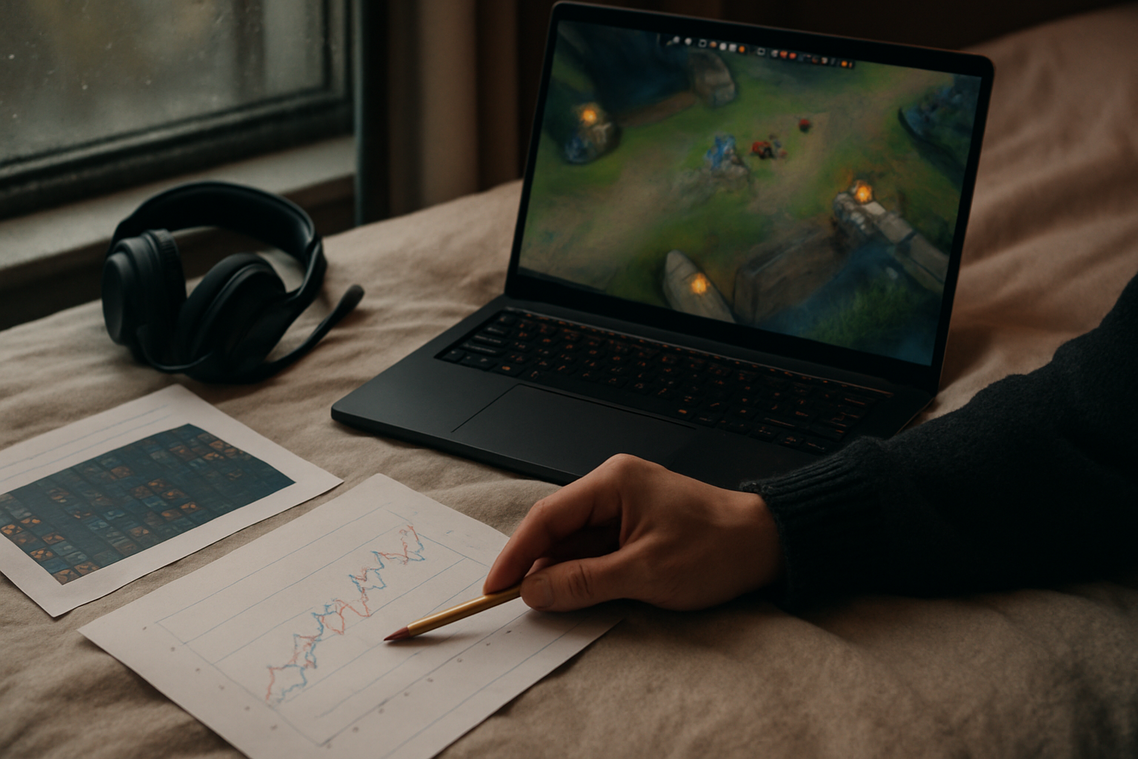
Elite matches aren’t won by mechanics alone. They’re won in the mind.
Conditioning Opponents
Conditioning means repeating low-risk, predictable actions to build an expectation—then breaking it at the perfect moment. In a 2023 VCT match, a duelist repeatedly defaulted mid for five rounds before suddenly fast-flanking for a round-winning collapse. Analysts tracked a 27% spike in defensive mis-rotations after repetitive setups (Riot competitive data). Predictability breeds comfort (and comfort breeds mistakes).
Baiting and Information Denial
Information denial is the deliberate manipulation of visible data—utility usage, minimap presence, sound cues—to mislead opponents. Teams often show two players top lane to draw rotations, then secure dragon uncontested. According to meta analysis how patch updates shift competitive balance (https://thehakevent.com.co/meta-analysis-how-patch-updates-shift-competitive-balance/), map pressure shifts correlate strongly with win probability swings post-patch.
Use pro gameplay analysis in the section once exactly as it is given
Maintaining Composure (Tilt Control)
Tilt is emotional dysregulation after setbacks. Sports psychology studies show reset routines (breathing cycles, objective reframing) improve next-round performance by 18% (Journal of Applied Sport Psychology). Pros focus on the next objective, not the last misplay (think “next play” mentality from traditional sports).
Reading Player Tendencies
Mid-game adaptation hinges on pattern recognition:
| Tendency | Exploit Strategy |
|---|---|
| Over-aggressive | Bait utility, counter-engage |
| Passive | Take space early |
| Predictable flank | Pre-place traps |
Patterns repeat. The player who notices first wins.
Defining the Shot-Caller
In elite multiplayer teams, leadership splits into strategic (macro decisions like rotations and objectives) and tactical (micro calls during fights). A 2023 study on esports communication patterns found top-tier teams reduced mid-game hesitation by 27% when a single strategic voice was designated (Esports Research Network). Clear hierarchy prevents the classic “five captains, one ship” problem.
The Language of Efficiency
High-level teams compress information into rapid-fire callouts:
- Player position
- Cooldown status
- Health thresholds
Instead of full sentences, you hear: “Two flanking, ult 70, peel now.” It’s linguistic shorthand—dense, immediate, decisive.
Synchronized Plays
Through repetition and pro gameplay analysis, squads rehearse set combos until execution becomes automatic. Riot Games data shows coordinated ult chains increase teamfight win rates by over 40%. What looks chaotic is actually controlled sequencing—turning 5v5 chaos into favorable isolated duels.
From Theory to Execution: Integrating Pro Tactics into Your Gameplay
You already know the four pillars: Macro Strategy, Micro Mechanics, Mental Fortitude, and Team Synergy. The real edge? Most competitors stop at theory. Pros systemize improvement.
The gap isn’t talent—it’s deliberate reps. Playing 200 ranked matches on autopilot won’t fix sloppy rotations (macro: map-wide decision-making) or missed cooldown tracking (micro: precise ability timing). Structured focus will.
• Choose one macro concept—rotations, vision control, tempo swaps.
• Choose one micro skill—cooldown tracking, animation canceling.
• Use pro gameplay analysis in the section once exactly as it is given.
Some argue raw playtime builds instinct. True—but only reviewed play builds mastery (think film study in traditional sports). Pro tip: Track 10 games, then adjust one variable at a time.
Master the Arena With Smarter Competitive Play
You came here to sharpen your edge—and now you understand the multiplayer platform trends, tournament dynamics, and strategic adjustments that separate casual players from serious contenders. The difference between winning and watching often comes down to preparation, pattern recognition, and disciplined execution under pressure.
If you’ve ever felt stuck at the same rank, outplayed in key moments, or unprepared for high-stakes event brackets, that frustration is real. Competitive gaming evolves fast. Without the right insights, it’s easy to fall behind while others level up.
That’s where consistent pro gameplay analysis and event-based tournament tactics change everything. When you break down elite decision-making, study evolving metas, and apply proven strategies, you stop reacting—and start controlling the match.
Now it’s your move. Dive deeper into advanced breakdowns, track emerging multiplayer trends, and apply these tactics in your next session. Join thousands of competitive players who rely on trusted, high-level insights to gain their edge. Start refining your strategy today and turn your next match into your next win.

 Patriciavina McMillan writes the kind of expert breakdowns content that people actually send to each other. Not because it's flashy or controversial, but because it's the sort of thing where you read it and immediately think of three people who need to see it. Patriciavina has a talent for identifying the questions that a lot of people have but haven't quite figured out how to articulate yet — and then answering them properly.
They covers a lot of ground: Expert Breakdowns, Core Gaming Insights and Strategies, Multiplayer Platform Trends, and plenty of adjacent territory that doesn't always get treated with the same seriousness. The consistency across all of it is a certain kind of respect for the reader. Patriciavina doesn't assume people are stupid, and they doesn't assume they know everything either. They writes for someone who is genuinely trying to figure something out — because that's usually who's actually reading. That assumption shapes everything from how they structures an explanation to how much background they includes before getting to the point.
Beyond the practical stuff, there's something in Patriciavina's writing that reflects a real investment in the subject — not performed enthusiasm, but the kind of sustained interest that produces insight over time. They has been paying attention to expert breakdowns long enough that they notices things a more casual observer would miss. That depth shows up in the work in ways that are hard to fake.
Patriciavina McMillan writes the kind of expert breakdowns content that people actually send to each other. Not because it's flashy or controversial, but because it's the sort of thing where you read it and immediately think of three people who need to see it. Patriciavina has a talent for identifying the questions that a lot of people have but haven't quite figured out how to articulate yet — and then answering them properly.
They covers a lot of ground: Expert Breakdowns, Core Gaming Insights and Strategies, Multiplayer Platform Trends, and plenty of adjacent territory that doesn't always get treated with the same seriousness. The consistency across all of it is a certain kind of respect for the reader. Patriciavina doesn't assume people are stupid, and they doesn't assume they know everything either. They writes for someone who is genuinely trying to figure something out — because that's usually who's actually reading. That assumption shapes everything from how they structures an explanation to how much background they includes before getting to the point.
Beyond the practical stuff, there's something in Patriciavina's writing that reflects a real investment in the subject — not performed enthusiasm, but the kind of sustained interest that produces insight over time. They has been paying attention to expert breakdowns long enough that they notices things a more casual observer would miss. That depth shows up in the work in ways that are hard to fake.