
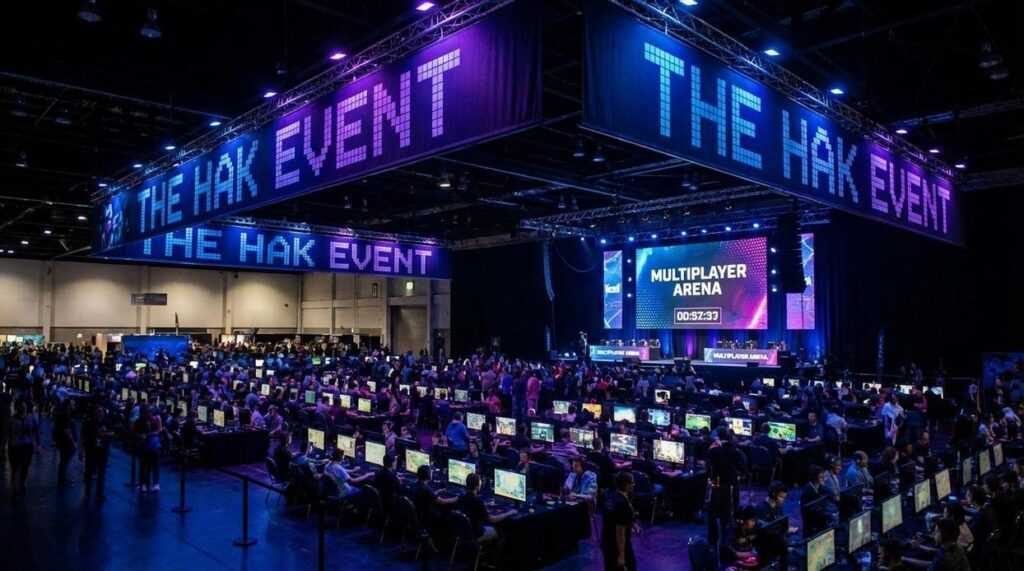
I’ve helped organize dozens of gaming tournaments over the years. Some flopped hard. Others became the kind of events people still talk about.
You’re probably thinking about running your own multiplayer event but don’t know where to start. The technical setup alone sounds like a nightmare, right?
Here’s the truth: most people overcomplicate it. They get stuck on the details before they even have a solid plan.
I’m going to walk you through the exact process I use. Not theory. The actual steps that work.
This guide covers everything from your initial concept to the final bracket. I’ll show you how to handle the tech, get people to show up, and avoid the mistakes that kill most first-time events.
We’ve tested these tactics in real competitive settings. We know what works for small LAN parties with friends and what scales up for bigger online competitions.
Throughout this guide, we’ll use a hypothetical Hack Event as our working example. You’ll see how each decision connects and builds on the last one.
You’ll walk away with a complete framework. Not just ideas but a blueprint you can actually use.
Whether you’re planning something small or want to go bigger, this is how you make it happen.
Phase 1: Blueprinting Your ‘Hack Event’
You can’t run a good multiplayer event without a solid plan.
I see people jump straight into Discord announcements and registration forms before they’ve figured out what they’re actually building. Then they wonder why nobody shows up or why everything falls apart halfway through.
Here’s what I mean.
Define Your Core Concept
What are you actually running here? A cutthroat tournament where only the best survive? A laid-back community night where people just want to hang out and play? Maybe a charity stream where the competition matters less than the cause?
This isn’t just semantics. Your answer changes everything that comes next.
If you’re running a competitive bracket, you need strict rules and clear stakes. If it’s a casual meetup, you can be looser with timing and structure. A charity event needs different promotion than a hardcore tournament.
Select Your Game & Platform
Pick something people actually want to play together.
I know that sounds obvious, but I’ve watched organizers choose games based on what they like instead of what has an active multiplayer scene. That’s backwards.
Look at player counts. Check if the game has spectator tools (because watching matters almost as much as playing). And be honest about the technical side. PC events give you more control but require more setup. Consoles are simpler but limit your options.
Establish the Format & Ruleset
Single elimination is fast but brutal. One loss and you’re done.
Double elimination gives players a second chance and keeps more people engaged longer. Round robin works great for smaller groups where you want everyone to play multiple matches.
Write down your rules before anyone registers. Cover the basics like player conduct and map selection, but also think through the weird stuff. What happens if someone disconnects? How do you handle disputes? (Because trust me, you’ll get disputes.)
Budgeting for Success
Even free events cost something.
Maybe it’s just your time. Maybe it’s software licenses or a small prize pool. If you’re going physical, add venue costs and equipment.
I’m not saying you need thousands of dollars. I’m saying you need to know what you’re spending before you start. A $50 budget that you’ve actually planned beats a vague “we’ll figure it out” approach every time. When planning your gaming expenses for Thehakevent, remember that a well-defined budget can make all the difference in ensuring you enjoy the experience without financial stress. When planning your gaming expenses for Thehakevent, remember that a well-defined budget not only maximizes your enjoyment but also prevents any unwelcome financial surprises down the line.
At Thehakevent, we’ve seen small events with tight budgets crush it because they knew their numbers. And we’ve seen well-funded events flop because nobody did the math upfront.
Get this phase right and everything else gets easier.
Phase 2: The Logistics & Technical Stack
Have you ever watched a tournament fall apart because someone forgot to test the internet?
I have. More times than I’d like to admit.
Here’s what most people get wrong about running gaming events. They think the fun part is picking the game and setting prize pools. But the real work? That’s in the logistics.
And if you skip this phase, your event of the year thehakevent becomes the disaster of the year pretty quick.
Picking Your Venue
First question: are you going online or physical?
For online events, you need a Discord server that actually makes sense. Not just random channels thrown together. I’m talking organized spaces for announcements, rules, check-ins, and player support.
For LAN events, the stakes are higher. You need to think about internet stability before anything else. Then power availability. Then space per player. (Nobody wants to sit elbow to elbow for six hours.)
The Hardware You Can’t Skip
If you’re running a LAN, here’s your shopping list.
A good network switch. Not the cheap one from your closet. Enough power strips that you’re not daisy-chaining like it’s 2005. Ethernet cables for every station.
And the internet connection? That’s non-negotiable. High-speed and dedicated. Not your cousin’s WiFi router.
Tournament Management Software Event of the Year Thehakevent builds on exactly what I am describing here.
This is where you save yourself from drowning in spreadsheets.
Platforms like Challonge or Battlefy handle your brackets, player registration, and match reporting. They automate the stuff that would otherwise eat up your entire day.
Do you really want to manually update brackets while also answering player questions? I didn’t think so.
Your Communication Hub
Pick one platform and stick with it.
Discord is the standard for multiplayer event thehakevent scenarios. Set up dedicated channels. Make the rules channel read-only. Pin important announcements.
When players know exactly where to go for information, you spend less time repeating yourself and more time actually running the event.
Sound familiar? Good. That means you’re ready to build something that actually works.
Phase 3: Building Hype & Filling Brackets
You’ve got your game picked. Your format is locked in.
Now comes the part that makes most tournament organizers want to quit before they even start.
Getting people to actually show up.
I’ve seen it happen too many times. Someone puts together a solid tournament structure and then just… posts about it once on Twitter. They wonder why only three people register. To truly make your tournament stand out and attract a crowd, it’s essential to promote it vigorously across multiple platforms, especially if you aim to elevate it to the status of the Best Online Gaming Event Thehakevent. To ensure your tournament reaches its full potential and becomes the Best Online Gaming Event Thehakevent, it’s crucial to leverage a multi-platform promotional strategy rather than relying on a single social media post.
Here’s what drives me crazy about this phase.
Everyone assumes if you build it, they will come.
They won’t.
You need to put in the work to fill those brackets. And honestly? It’s not even that hard. People just skip the basics.
Create an Event Page That Actually Works
Your tournament needs a home base. Not buried in a Discord announcement channel where it’ll disappear in two hours.
I’m talking about a real page. It should show the date, time, game, rules, and prize pool right at the top. No scrolling. No hunting.
And for the love of everything, make the sign-up button impossible to miss.
(I’ve clicked through event pages where I genuinely couldn’t find how to register. Don’t be that person.)
Get the Word Out
You need to go where players already hang out.
Reddit works. Game-specific subreddits and communities like r/gametournaments actually want to hear about your event. Discord servers for your chosen game? Even better.
Social media helps too, but you need the right hashtags. Generic ones won’t cut it.
The multiplayer event thehakevent approach focuses on meeting players where they already are instead of expecting them to find you.
Registration Should Be Simple
Ask for what you need. Nothing more.
Once someone signs up, send them straight to your Discord. Give them clear instructions about check-in day. Don’t make them guess.
Prizes Don’t Have to Break the Bank
Cash is great. But you know what also works?
Sponsored gear. In-game cosmetics. A custom trophy with their username on it.
Players want recognition more than they want money most of the time. Give them something they can show off and you’ll get people competing hard.
Phase 4: Game Day Execution & Post-Event Wrap-Up
You’ve planned everything. Now comes the part where most tournament organizers fall apart.
Game day.
Here’s my take after running dozens of these things. The difference between a smooth event and a disaster comes down to what you do in the hour BEFORE your first match starts.
The Pre-Flight Checklist
Test everything. I mean everything.
Your bracket software. Your Discord channels. Your backup communication method (because yes, Discord will go down at the worst possible time).
Brief your volunteer mods on the rules. Make sure they know how to handle the guy who swears his connection didn’t drop and he totally won that round.
Send one final reminder to all registered players. You’ll still get no-shows, but at least you tried.
When you’re running a best Online Gaming Event Thehakevent, preparation isn’t optional.
During the Event
People will disappear. Connections will fail. Someone will argue about a ruling.
Have a clear dispute process ready. Post bracket updates in real time so players aren’t sitting around wondering when they’re up next.
If you can swing it, stream the finals. Twitch works great for this. Grab screenshots of big moments and the final bracket because you’ll want those later. As you prepare to stream the finals of Thehakevent, be sure to capture those unforgettable moments and the final bracket, as they’ll serve as cherished memories and highlights for your gaming journey. As you gear up to stream the finals of Thehakevent, remember to keep your camera ready to immortalize those epic plays and the excitement of the final bracket.
After It’s Over
Thank your players publicly. Congratulate your winners. Then send out a quick survey while the event is still fresh in everyone’s mind.
That feedback? It’s how you make the next multiplayer event thehakevent actually better instead of just doing the same thing again.
You Are Now an Event Organizer
You now have the complete blueprint.
Four phases that take you from concept to conclusion. Blueprinting, Logistics, Promotion, and Execution.
I built this framework because I know how overwhelming event planning feels. You’re juggling a hundred moving parts and wondering what you’re forgetting.
That chaos is gone now. You have a structured process that keeps you moving forward without missing the critical details.
The system works because each phase has a clear focus. You’re not trying to do everything at once. You build momentum as you go.
Here’s the thing about multiplayer event thehakevent planning: the hardest part is starting.
You’ve been thinking about this for too long. Stop dreaming and start planning.
Define the core concept for your own Hack Event today. Write down three things: your game, your format, and your ideal player count.
That’s your first step. Take it now.

 Kyralith Zelthanna has opinions about gamer setup optimization tips. Informed ones, backed by real experience — but opinions nonetheless, and they doesn't try to disguise them as neutral observation. They thinks a lot of what gets written about Gamer Setup Optimization Tips, Game Industry Buzz, Expert Breakdowns is either too cautious to be useful or too confident to be credible, and they's work tends to sit deliberately in the space between those two failure modes.
Reading Kyralith's pieces, you get the sense of someone who has thought about this stuff seriously and arrived at actual conclusions — not just collected a range of perspectives and declined to pick one. That can be uncomfortable when they lands on something you disagree with. It's also why the writing is worth engaging with. Kyralith isn't interested in telling people what they want to hear. They is interested in telling them what they actually thinks, with enough reasoning behind it that you can push back if you want to. That kind of intellectual honesty is rarer than it should be.
What Kyralith is best at is the moment when a familiar topic reveals something unexpected — when the conventional wisdom turns out to be slightly off, or when a small shift in framing changes everything. They finds those moments consistently, which is why they's work tends to generate real discussion rather than just passive agreement.
Kyralith Zelthanna has opinions about gamer setup optimization tips. Informed ones, backed by real experience — but opinions nonetheless, and they doesn't try to disguise them as neutral observation. They thinks a lot of what gets written about Gamer Setup Optimization Tips, Game Industry Buzz, Expert Breakdowns is either too cautious to be useful or too confident to be credible, and they's work tends to sit deliberately in the space between those two failure modes.
Reading Kyralith's pieces, you get the sense of someone who has thought about this stuff seriously and arrived at actual conclusions — not just collected a range of perspectives and declined to pick one. That can be uncomfortable when they lands on something you disagree with. It's also why the writing is worth engaging with. Kyralith isn't interested in telling people what they want to hear. They is interested in telling them what they actually thinks, with enough reasoning behind it that you can push back if you want to. That kind of intellectual honesty is rarer than it should be.
What Kyralith is best at is the moment when a familiar topic reveals something unexpected — when the conventional wisdom turns out to be slightly off, or when a small shift in framing changes everything. They finds those moments consistently, which is why they's work tends to generate real discussion rather than just passive agreement.