
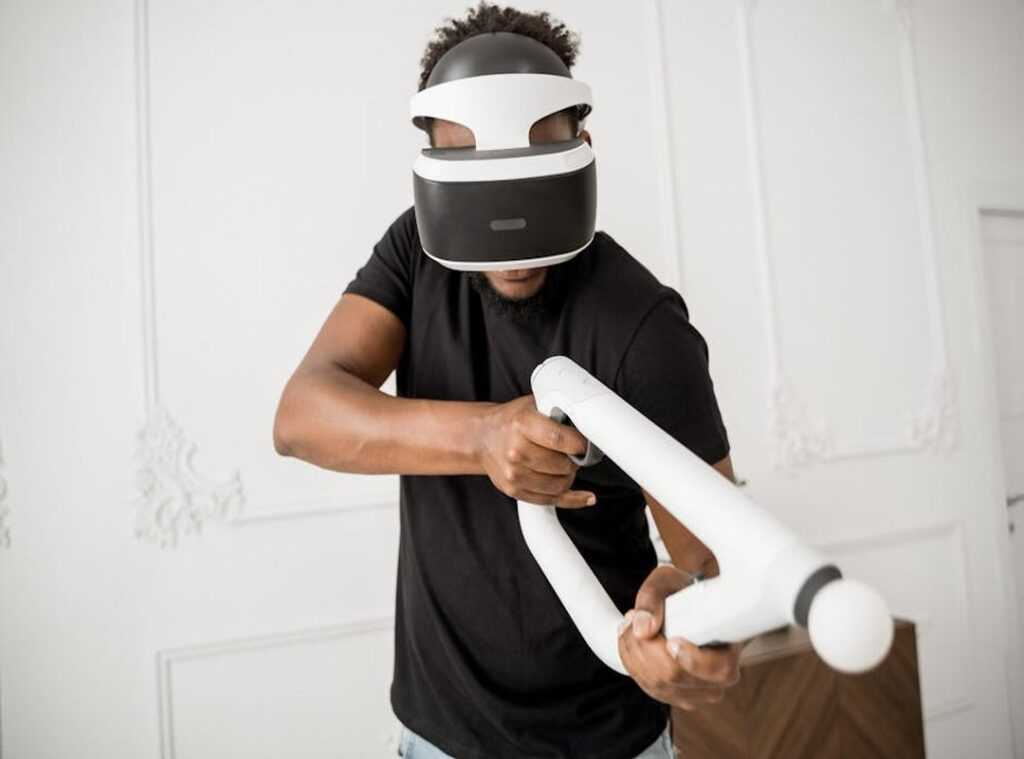
Ever found yourself just tapping away in a game, barely present, and suddenly a moment catches you off guard? That’s the magic of true immersion. It’s like the difference between skimming a book and getting lost in its pages.
We’re diving into what makes virtual reality gaming more than just a buzzword. There’s real science and art behind these experiences, and it’s not just about the flashy tech.
I’ve spent years dissecting game design and strategies from both a player’s and developer’s viewpoint. This isn’t coming from someone who just dabbles. I live and breathe this stuff.
You want to know how to truly get lost in those digital worlds? Stick around. You’ll learn what immersion really is, what tech drives it, and how to maximize it for your setup.
Immersion in Games: Beyond Just Pretty Graphics
When it comes to virtual reality gaming, most folks think it’s all about those jaw-dropping photorealistic graphics. But let me tell you, that’s not quite right. Immersion is more than eye candy.
It’s about how a game makes you feel, connect, and interact. Let’s dig into these three pillars.
Sensory Immersion (The Sights & Sounds)
This is where the magic happens. It’s not just about visuals but the entire sensory experience. Take the sound design in ‘Hellblade: Senua’s Sacrifice’.
It’s haunting and engrossing. You hear whispers that make your skin crawl. And then there’s ‘Cyberpunk 2077’.
Sure, it’s buggy, but its environmental density? Unmatched. It feels alive, bustling, real.
Narrative Immersion (The Story & World)
Good stories make games unforgettable. I mean, who hasn’t been sucked into ‘The Witcher 3’ with its rich lore and complex characters? You care about the world because the game makes you care.
Or consider a Telltale game. Each choice is a heartbeat, a pulse of the story you control. It’s not just a game; it’s an experience.
Mechanical Immersion (The Feel of Control)
Control is key. Feel the heft of Kratos’ axe in ‘God of War’. It’s not just pressing buttons; it’s power, impact, real.
Or the smooth parkour in ‘Dying Light’. You’re not just controlling a character, you’re in their shoes, dodging, weaving, surviving. For more on how games evolve with these trends, learn more.
The Tech Forging New Realities
When you think of virtual reality gaming, it’s easy to get stuck on the obvious. Sure, the Quest 3 and PSVR2 are flashy, but let’s talk about the nitty-gritty hardware making waves. Take advanced haptics for example.
The PlayStation 5’s DualSense controller is nothing short of a game-changer. Imagine feeling the pitter-patter of rain or the tension in a bowstring. You’re not just playing the game; you’re living in it.
But it’s not just about touch. Sound plays a huge role too. Have you tried gaming with Spatial Audio like Dolby Atmos?
It creates a 3D soundscape, giving you precise directional cues. You can literally hear the enemy sneaking up behind you. It’s the kind of technology that makes you wonder how you ever gamed without it.
Moving on to visuals, there’s a revolution with display technology. High refresh rates (120Hz or more) and HDR aren’t just bells and whistles. They make the action smoother and more lifelike.
The screen isn’t a barrier anymore; it’s a window into another world. This tech pulls you into the experience in ways we only dreamed of a few years ago.
If you’re interested in the broader virtual reality gaming space, it’s important to dive into what these technologies bring to the table. They’re changing not just how we play but how we perceive gaming itself. And that’s what makes this tech more than just a set of fancy gadgets.
It’s the key to new realities in gaming.
Immersive Gaming: Your Edge in Multiplayer
Ever wondered why some players seem to always know exactly where you are? It’s not magic. It’s immersion.
Let’s talk about how being truly in the game world (not just playing it) gives you a tactical edge. Take audio, for example. In games like ‘Valorant’ or ‘Call of Duty: Warzone’, spatial audio lets you pinpoint enemy footsteps or reloads without even seeing them.
That’s the difference between a headshot and a respawn.
And what about visuals? High refresh rates and low-latency displays aren’t just for bragging rights. They give you clearer information during those split-second decisions.
Painful, right? Contrast that with a smooth, responsive display that keeps up with every move. Now you can react quickly and accurately.
Imagine you’re in a fast-paced fight. Your screen lags. You miss a key shot.
Mechanical immersion is another game-changer. It’s about the ‘feel’ of the game. When controls are responsive and predictable, you can build muscle memory.
Think of a fighting game or a high-skill shooter. You master a combo or a trick shot because the game responds just as you expect. Under pressure, you execute complex maneuvers like a pro.
And don’t even get me started on virtual reality gaming. It takes immersion to a whole new level, but that’s a story for another day.
Curious about how indie games are influencing the industry? Check out indie games shaping market. You’ll see why big studios are taking notes.
Immersion isn’t just a gimmick. It’s your secret weapon. So, are you ready to dive deeper into the game?
Build Your Own Immersion Station: Tips to Game Tonight
You don’t need to empty your wallet to dive deep into virtual reality gaming. You just need to be smart about it. Here’s how you can transform your setup with what you’ve got (or with minimal investment).
Let’s start with audio. It’s the secret sauce of immersion. A good pair of headphones is the single best upgrade per dollar.
Trust me, the difference is night and day. Do yourself a favor and let any spatial audio settings you have access to, like Windows Sonic or Dolby Atmos. Feeling like you’re inside the game is priceless.
Now, let’s talk about tweaking settings. In-game adjustments can make or break your experience. Try turning off those annoying HUD elements.
They clutter your screen more than you think. Find a Field of View (FOV) that feels natural. And don’t forget to calibrate brightness or HDR for your room.
You want it to look real, not washed out.
Next, control your environment. This is where you can really fine-tune your experience. Minimize external distractions.
A dimly lit room works wonders to keep your focus on the screen. Silence those pesky phone notifications. They always seem to ping at the worst moment.
Finally, let’s not forget about the physical connection. Make sure you’re sitting at the right distance from the screen. Too close and you’ll strain your eyes.
Too far and you’ll miss the details. Comfort matters too. Your controller or mouse/keyboard should feel like an extension of you.
Comfortable and responsive. That’s when gaming becomes magical.
Stop Playing It Safe, Dive In Now
So, you’ve got the gist of virtual reality gaming. It’s not just about playing (it’s) about experiencing. If you’ve ever felt like you’re just going through the motions, you’re not alone.
The key to true immersion is the right mix of game design, tech, and your unique setup. Want to feel the thrill? Pick one tip from the ‘Immersion Station’ section.
Try it in your next gaming session. You’ll see the difference. Really feel it.
Don’t just play the game. Live it. Dive in now, and change the way you see gaming forever.
Ready to raise your experience?

 Patriciavina McMillan writes the kind of expert breakdowns content that people actually send to each other. Not because it's flashy or controversial, but because it's the sort of thing where you read it and immediately think of three people who need to see it. Patriciavina has a talent for identifying the questions that a lot of people have but haven't quite figured out how to articulate yet — and then answering them properly.
They covers a lot of ground: Expert Breakdowns, Core Gaming Insights and Strategies, Multiplayer Platform Trends, and plenty of adjacent territory that doesn't always get treated with the same seriousness. The consistency across all of it is a certain kind of respect for the reader. Patriciavina doesn't assume people are stupid, and they doesn't assume they know everything either. They writes for someone who is genuinely trying to figure something out — because that's usually who's actually reading. That assumption shapes everything from how they structures an explanation to how much background they includes before getting to the point.
Beyond the practical stuff, there's something in Patriciavina's writing that reflects a real investment in the subject — not performed enthusiasm, but the kind of sustained interest that produces insight over time. They has been paying attention to expert breakdowns long enough that they notices things a more casual observer would miss. That depth shows up in the work in ways that are hard to fake.
Patriciavina McMillan writes the kind of expert breakdowns content that people actually send to each other. Not because it's flashy or controversial, but because it's the sort of thing where you read it and immediately think of three people who need to see it. Patriciavina has a talent for identifying the questions that a lot of people have but haven't quite figured out how to articulate yet — and then answering them properly.
They covers a lot of ground: Expert Breakdowns, Core Gaming Insights and Strategies, Multiplayer Platform Trends, and plenty of adjacent territory that doesn't always get treated with the same seriousness. The consistency across all of it is a certain kind of respect for the reader. Patriciavina doesn't assume people are stupid, and they doesn't assume they know everything either. They writes for someone who is genuinely trying to figure something out — because that's usually who's actually reading. That assumption shapes everything from how they structures an explanation to how much background they includes before getting to the point.
Beyond the practical stuff, there's something in Patriciavina's writing that reflects a real investment in the subject — not performed enthusiasm, but the kind of sustained interest that produces insight over time. They has been paying attention to expert breakdowns long enough that they notices things a more casual observer would miss. That depth shows up in the work in ways that are hard to fake.